









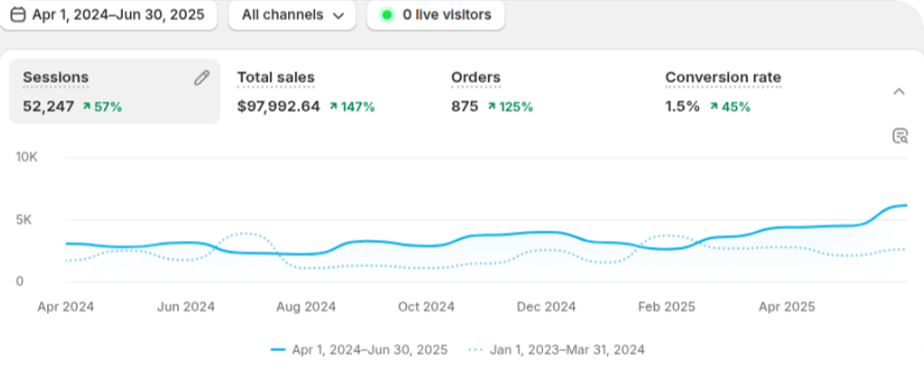
An online retailer specializing in custom embroidered linens and personalized gifts sells cocktail napkins and wedding handkerchiefs. The reported e-commerce snapshot records 52.2K sessions and 875 orders with nearly $98K in sales and a 1.5% conversion rate.
It also lists increases of 57% in sessions, 125% in orders, and 147% in sales against the previous period. Google Search Console recorded 8.38K clicks and 698K impressions from January to June 2025. The case study reviews store outcomes alongside search visibility data.
The catalog pairs table linens for hosts with handkerchiefs for wedding keepsakes. Weak organic visibility limited how easily shoppers could discover either group.
At the start of the project, the retailer had low organic traffic and weak search rankings. Product visibility was limited across its custom embroidered linens and personalized gifts. The store also generated very few sales. This left shoppers with fewer opportunities to find its catalog through nonpaid search.
The core problem was a gap between the catalog’s specific products and its reach in organic search. Cocktail napkins, wedding handkerchiefs, and personalized home accents served distinct needs. Yet weak rankings limited the retailer’s presence for relevant product searches. Low organic traffic left fewer shoppers reaching those product pages.
This mattered because these products serve focused needs such as wedding gifting and home entertaining. Shoppers searching by item or occasion had fewer ways to reach a relevant page. Limited visibility reduced these discovery opportunities. Very few sales made the search gap a commercial concern. The data do not establish that weak rankings caused low sales.
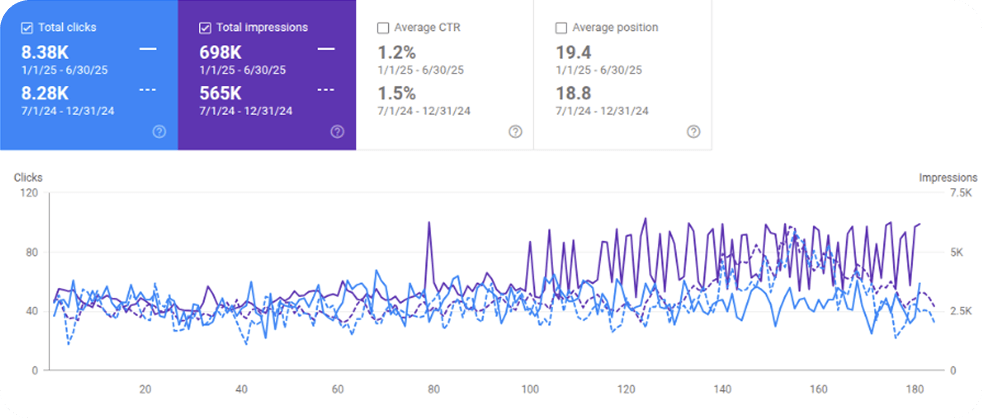
Google Search Console data yield an approximate 1.2% CTR for January to June 2025 with an average position near 19. These figures show impressions did not often become clicks. Without query data, the cause remains unclear.
Keyword research grouped terms by product customization purchase intent and seasonality. Product searches named items such as napkins or handkerchiefs. Occasion searches tied them to weddings or home entertaining. No query report confirms which themes drew visits or sales.
SEMrush estimated 1.3K ranking keywords and 3.3K organic visits. Its growth figures lack confirmed dates and are not directly comparable with Search Console clicks. Store data includes no organic sales, so revenue growth cannot be tied to search.

Planning centered on assigning search themes to relevant store pages. This gave page changes a clear focus and kept product topics separate from seasonal content. It suited a catalog where shoppers look for specific embroidered items or gifts tied to occasions. The plan also considered how related pages connect within the store so visitors had routes between relevant items.

Confirmed work included keyword mapping and page or metadata updates. The team completed content work and internal linking. Technical fixes and image updates were also part of the scope. Seasonal pages and link building were completed. Posts on Pinterest, Reddit, and Quora formed a separate publishing activity. The notes do not specify exact URLs, technical changes, backlink counts, or post results.

The completed work formed a coordinated SEO implementation across the store and external channels. Site work addressed how relevant pages were organized and connected. External publishing extended activity beyond the retailer’s website. Project records do not show which tasks changed rankings or sales. The next section reviews performance at project level without crediting one tactic.
The supplied website report lists 52,247 sessions, 875 orders, $97,992.64 in sales, and a 1.5% conversion rate. It reports increases of 57%, 125%, 147%, and 45%, respectively. The report describes the comparison as annual but gives no exact dates.
Google Search Console logged 8.38K clicks and 698K impressions from January through June 2025. Impressions rose from 565K in an unspecified comparison period. Average position was about 19. SEMrush estimates 3.3K organic visits and $3K in traffic value with reported increases of 5.2% and 9.01%. Its reporting dates are absent.
The report also claims first place rankings for many high-value keywords but provides no keyword list or date. Those rankings remain unverified. Storewide growth does not establish that organic search drove sales. For embroidered napkins and handkerchiefs, the next review needs organic product page visits and orders across matched date ranges.
The store report covers overall sessions, orders, sales, and conversion rate. Google Search Console reports search clicks and impressions from January to June 2025. Since the sources do not provide matched reporting periods or sales by traffic channel, they show separate business and search outcomes.

The team mapped keywords and updated pages and metadata. It also worked on content, internal links, technical fixes, and images. The work included seasonal pages and link building. The team also posted on Pinterest, Reddit, and Quora.
The project notes confirm page and content updates but do not list the exact URLs or product categories. The case study does not claim that every product page received the same work.
The store report records increases in sessions, order sales, and conversion rate. It does not specify the exact dates in the comparison period.
The records do not establish that. Sales are reported for the store as a whole without an organic search breakdown.
Google Search Console provided clicks, impressions, and average position. SEMrush provided estimates for organic traffic value and ranking keywords. These sources measure different things.
The report says the site ranked first for several high value keywords. It does not list the keywords or provide ranking dates. The available records do not verify the claim.
Lorem ipsum dolor sit amet consectetur. Tristique neque molestie morbi dictum tempus lorem platea nunc tincidunt.
Every campaign is planned, built, and checked by experienced marketers. They research keywords, write content, manage ads, and improve your website. An AI-assisted workflow helps them spot gaps faster. The goal: more qualified leads, not just more traffic.
Fill in a few details and our team will get in touch. We will review your goals and suggest the right next steps.