











A new Etsy shop in the digital and craft category opened in November 2025. It had zero listings, zero traffic, and zero sales. We built every part of it, from the shipping setup to the first listing. It went on to earn Etsy Star Seller status and consistent sales.
Our work ran from November 2025 to March 2026. For this Etsy SEO case study, we compared the last three months with the previous period. Revenue rose 1010.1%, orders rose 708.3%, and average order value climbed 31.4%. We also tracked profit and items sold.


This shop did not begin with a few listings or a small sales record. It began with nothing at all. Here is where it stood, what had to be built, and why that made early decisions harder.
The shop opened with nothing in place. There were zero listings and no visitors. The sales history was empty. The backend had not yet been set up. Shipping settings, categories, and product pages still needed to be created. A buyer could only check out once all of that existed.
We set five goals for the project. The first was building the store from scratch. Next came optimizing listings for SEO and conversions. After that, products needed visibility in Etsy search. Steady sales were the fourth target. Finally, we aimed to reach profitability while keeping the ad budget low.
A shop with no history has no reviews to build buyer trust. It has no sales data showing what sells. It also has no favorites or clicks showing which listings draw interest. Early choices had to rest on search intent and clear structure, then adjust as real signals arrived.
Our research centered on buyer intent. We looked for phrases people type when ready to purchase. Long-tail keywords took priority. These detailed, multi-word terms usually mirror what a shopper wants. Each listing sat in its correct category.
Etsy allows up to 13 tags per listing. We planned to use all 13 on every listing, so no tag slot went unused. Each tag gave a listing one more way to match a relevant search phrase.
We set a rule for advertising before spending anything. Instead of promoting every listing, we let engagement signals decide. Listings with favorites, engagement, or initial traction would qualify for Etsy Ads.

Every future order relied on a solid backend, so we started there. First, we created the shipping profile. Next, we connected the Etsy store to Shopify. Then came a clear shop layout. We built categories to help products surface in search. Finally, we grouped items into sections. This let shoppers browse related pieces with ease.

Products went live gradually. Each followed the same Etsy listing optimization process. Titles matched what purchase-ready shoppers search. Long-tail phrases filled all 13 tags. Every piece sat in its correct category.

Etsy Ads ran from January to March 2026 on a daily budget of $5. We did not promote the whole shop or every new listing. Only listings with favorites, engagement signals, or initial traction qualified for any ad spend. This kept the small daily budget focused on products that had already shown real buyer interest.
Revenue jumped 1010.1% in the last three months. Orders climbed 708.3% across the same window. Items sold rose even faster at 971.4%. Average order value increased 31.4%. Profit posted the biggest gain at 12002.4%. That number reflects a tiny starting base during the shop's launch phase. It does not prove overall profitability for the business.
The shop earned Etsy Star Seller status. This badge reflects strong customer service and on-time shipping. Positive reviews count as well. Conversion rate is the share of visits ending in an order. It stabilized at 2.4%. Etsy Ads returned a 2.56 ROAS on $5 daily. ROAS (return on ad spend) shows revenue per advertising dollar.
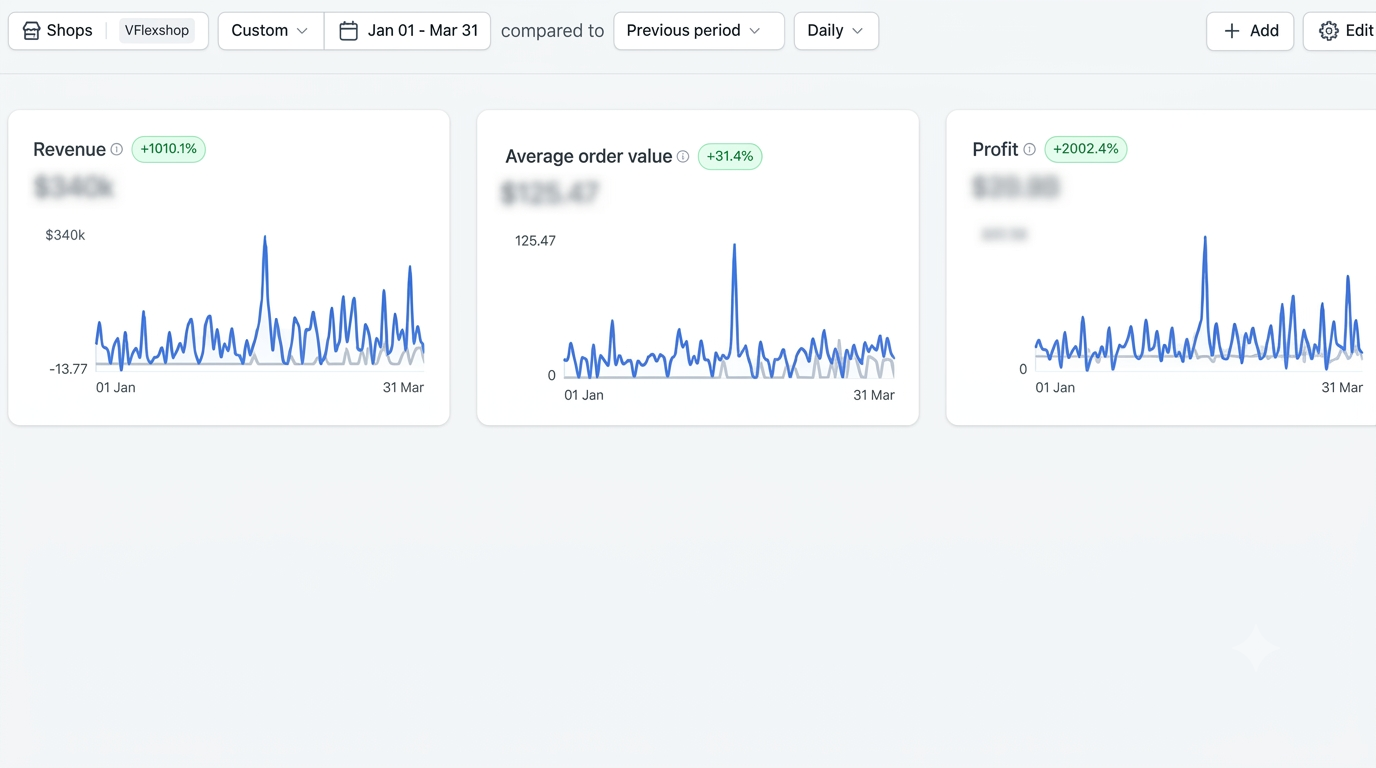
Items sold outpaced orders. Buyers were adding more pieces per purchase. Revenue grew faster than both. A larger average order value fits that pattern. Organic search drove the majority of sales. Etsy Ads added a profitable layer on a small budget.
The shop reached consistent traffic and sales within 90 days. A finished backend came before the first listing. Every product carried all 13 tags. Engagement signals decided which items earned paid promotion. Ads stayed profitable on just $5 per day.
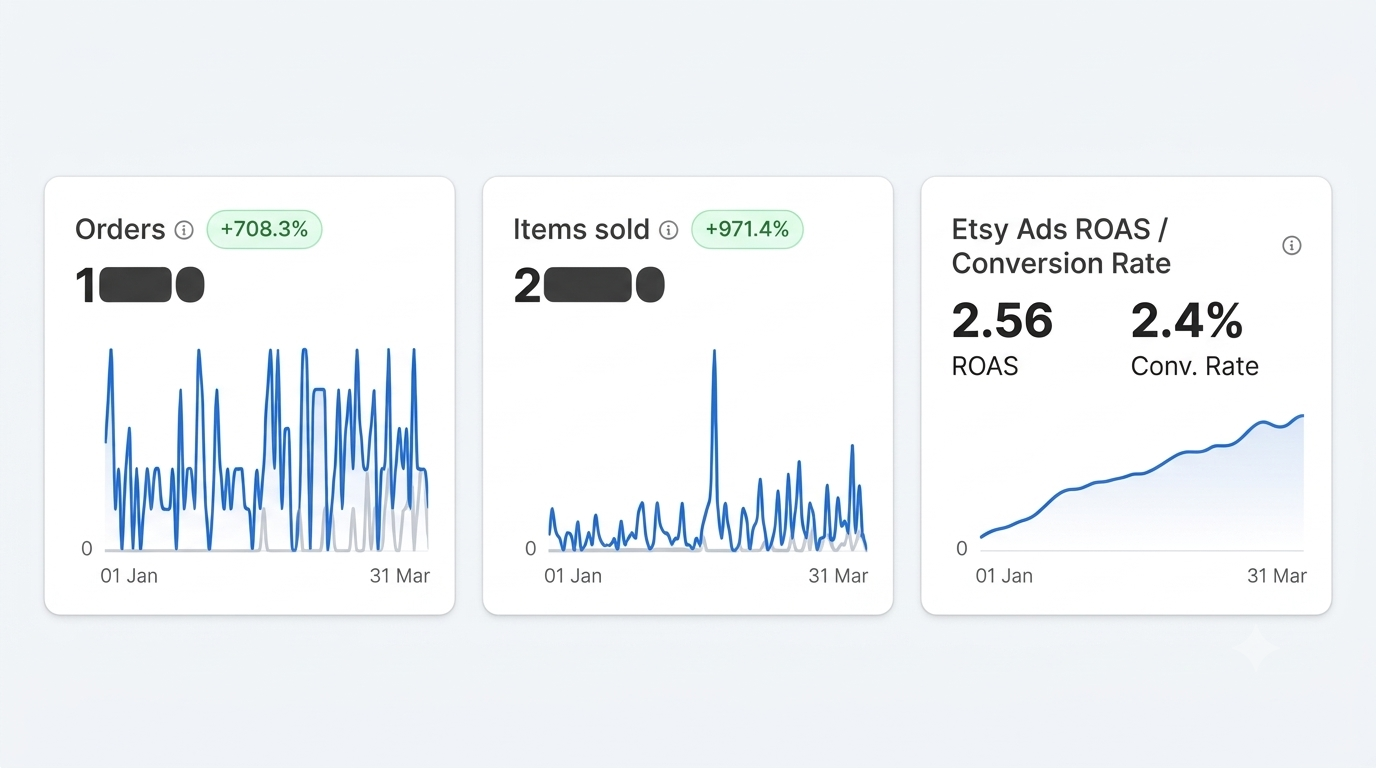

Revenue grew by 1010.1% in the last three months compared with the previous period. The previous period covered the shop’s launch phase, so the starting base was very small.
Etsy Ads ran from January to March 2026 on a $5 daily budget. The ads remained profitable, returning a 2.56 ROAS.
The majority of sales came from organic traffic. Etsy Ads added extra sales on top of that organic base.
The shop earned Etsy Star Seller status. It reflects strong customer service, on-time shipping, and positive reviews.
SEO-focused listings and performance-based ad scaling powered the growth. A structured store setup supported both. The data shows results alongside our work but cannot isolate each change’s effect.
Lorem ipsum dolor sit amet consectetur. Tristique neque molestie morbi dictum tempus lorem platea nunc tincidunt.
Every campaign is planned, built, and checked by experienced marketers. They research keywords, write content, manage ads, and improve your website. An AI-assisted workflow helps them spot gaps faster. The goal: more qualified leads, not just more traffic.
Fill in a few details and our team will get in touch. We will review your goals and suggest the right next steps.