









eCommerce SEO Case Study: How an Australian Wellness Brand Grew Organic Traffic Value by 18.38%

Project Overview

The client is an Australian eCommerce brand that sells wellness products online. Its range includes massage chairs, saunas, compression boots, and portable massagers. The site already had a solid digital presence. It still had room to win more organic visibility. It could also reach new shoppers through non-branded queries.

The team combined keyword strategy with content work. It then improved technical SEO and optimized pages for AI-generated answers. This eCommerce SEO case study tracks the results through the store’s sales figures from April to June 2026. Semrush and AI visibility data show how the site performed in search. Semrush and AI visibility data show how the site performed in search. Search results come from Semrush and AI visibility data.

  • +18.38%Organic Traffic Value Growth
  • +9.15%Organic Traffic Growth
  • 898Ranking Keywords
  • 26AI Search Mentions

Platforms and Tools That Supported the Work

  • Semrush_logo 1
  • shopify
  • WooCommerce
  • adobe commerce
  • big commerce
  • Amazon Seller Central
  • hotjar
  • Klaviyo
  • google-analytics
  • google merchant center (1)

The Challenge: Growing Beyond an Established Base

The brand was not starting from zero, but its search reach had clear limits.

An Established Store With Limited Reach on Competitive Searches

The brand started with an established digital presence but limited visibility for competitive search queries. These are searches where many retailers compete for the same shoppers. The existing presence gave the site a solid base to build on. The next step was to expand keyword coverage and reach more shoppers searching across its product categories. 

Rankings, Non-Branded Discovery, and Traffic Value Needed Work

Three issues held the site back. Its keyword rankings had to climb across several search positions. The store needed more new shoppers to find it through non-branded queries. Organic traffic value and wider visibility also had room to grow. On top of this, the website needed stronger optimization to sustain progress over time. 

Why Non-Branded Search and AI Answers Mattered

Non-branded searches reach shoppers who do not yet know the brand. They search for a product, not a store name. AI search platforms are a newer discovery channel the website needed to adapt to. Google AI Overviews, for example, are AI-generated summaries shown above standard results. Stores left out of these answers can miss shoppers who never click a regular result.

Research and Insights: Finding the Gaps in Search Visibility

The team reviewed where the brand’s search performance had the most room to improve. Those findings shaped a clear set of objectives.
  1. 01

    Five Opportunity Areas in the Brand's Search Performance

    The review pointed to five areas: competitive queries, ranking positions, non-branded discovery, traffic value, and the technical foundation. These areas are closely linked. Better technical health supports rankings, and better rankings across more queries can lift both traffic and its value.

  2. 02

    Objectives Set for the Campaign

    The team set six goals for the campaign. First, it aimed to widen organic visibility across relevant keywords. It also wanted better rankings for high-intent product and category terms, where shoppers are close to buying. Other targets covered non-branded traffic growth and a stronger technical foundation. Finally, the plan reached into AI search visibility and lasting revenue support through organic channels.

  3. 03

    Why AI Search Became Part of the Plan

    AI search visibility became an objective because content had to adapt to evolving AI search platforms. Tools such as ChatGPT and Gemini generate written answers instead of a list of links. Being mentioned or cited in those answers gives a brand another route to shoppers.

From Keywords to AI Answers: The Plan in Action

The team worked across four connected areas. Each one addressed a specific part of the problem.
  • Keyword Strategy Matched to Search Intent

    The team researched keywords to find strong search opportunities for the brand's products. It then built each page around search intent. Search intent is what a shopper wants to find. Next, the team refined keyword targeting on the store's main landing pages. This captured more organic demand. Keyword coverage grew across many ranking positions. Product-focused searches also gained more visibility.

  • Technical SEO to Support Crawlability & Indexing

    The team fixed technical SEO issues and improved the site's structure. It also strengthened indexing signals. Indexing is how search engines store pages so they can show them in results. Crawlability is how easily bots can find and read each page. These changes made the site easier for bots to reach and understand.

  • AI Search Optimization Across Four Platforms

    The team tracked and improved the brand's presence in ChatGPT and Gemini. It covered Google AI Overviews and Google AI Mode too. AI Mode offers a conversational way to search inside Google. The goal was for the brand to appear as a mention and a cited source in AI-generated answers.

Results and Impact: Growth Across Search and AI Visibility

The results draw on two data sources. Sales figures are the client’s own for April to June 2026. Search and AI figures come from Semrush and AI visibility data.

Organic Traffic Grew 9.15% and Traffic Value Rose 18.38%

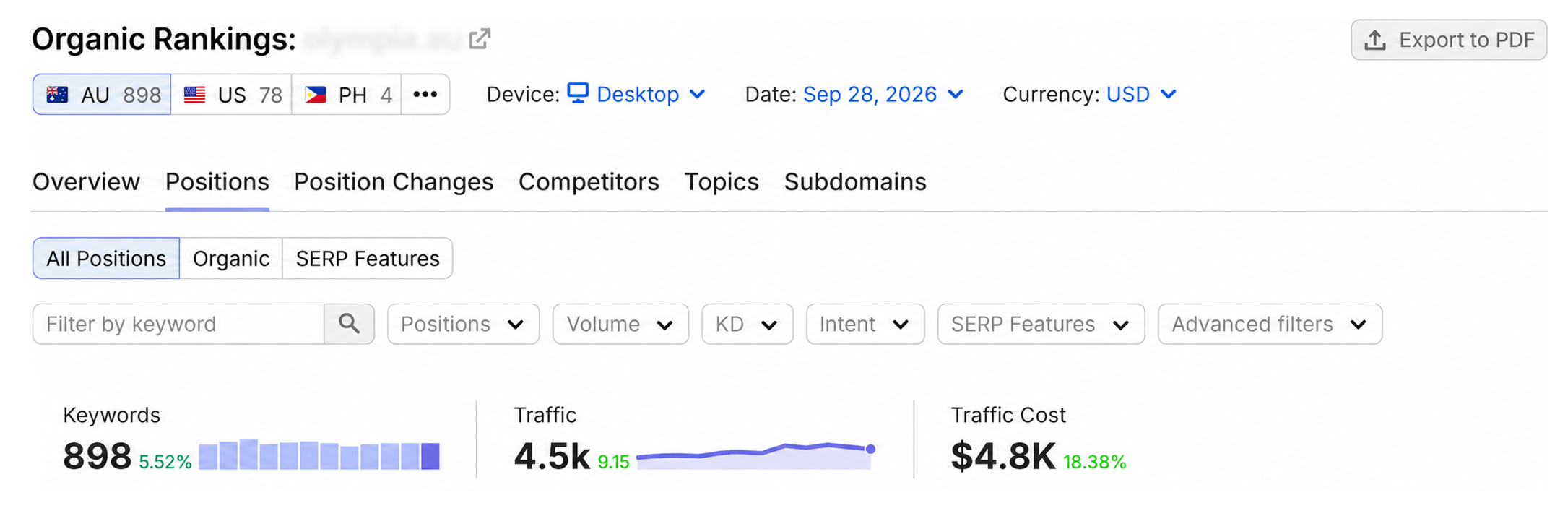
Semrush estimates 4.5K organic visits, a rise of 9.15%. These visitors arrive from unpaid search results. Estimated organic traffic value reached $4.8K, up 18.38%. Semrush calculates this figure as the cost of buying that traffic through paid ads.

Keyword Rankings and Non-Branded Organic Traffic Both Grew

The site ranks for 898 keywords, up 5.52%. These keyword rankings range from the Top 3 through the Top 10 and Top 20 to the Top 50. Some also appear in SERP features, which are special result formats on a search page. Non-branded organic traffic grew 5.85% to 4.3K visits. These people look for products, not for the brand name.
Current AI Search Visibility Across Four Platforms

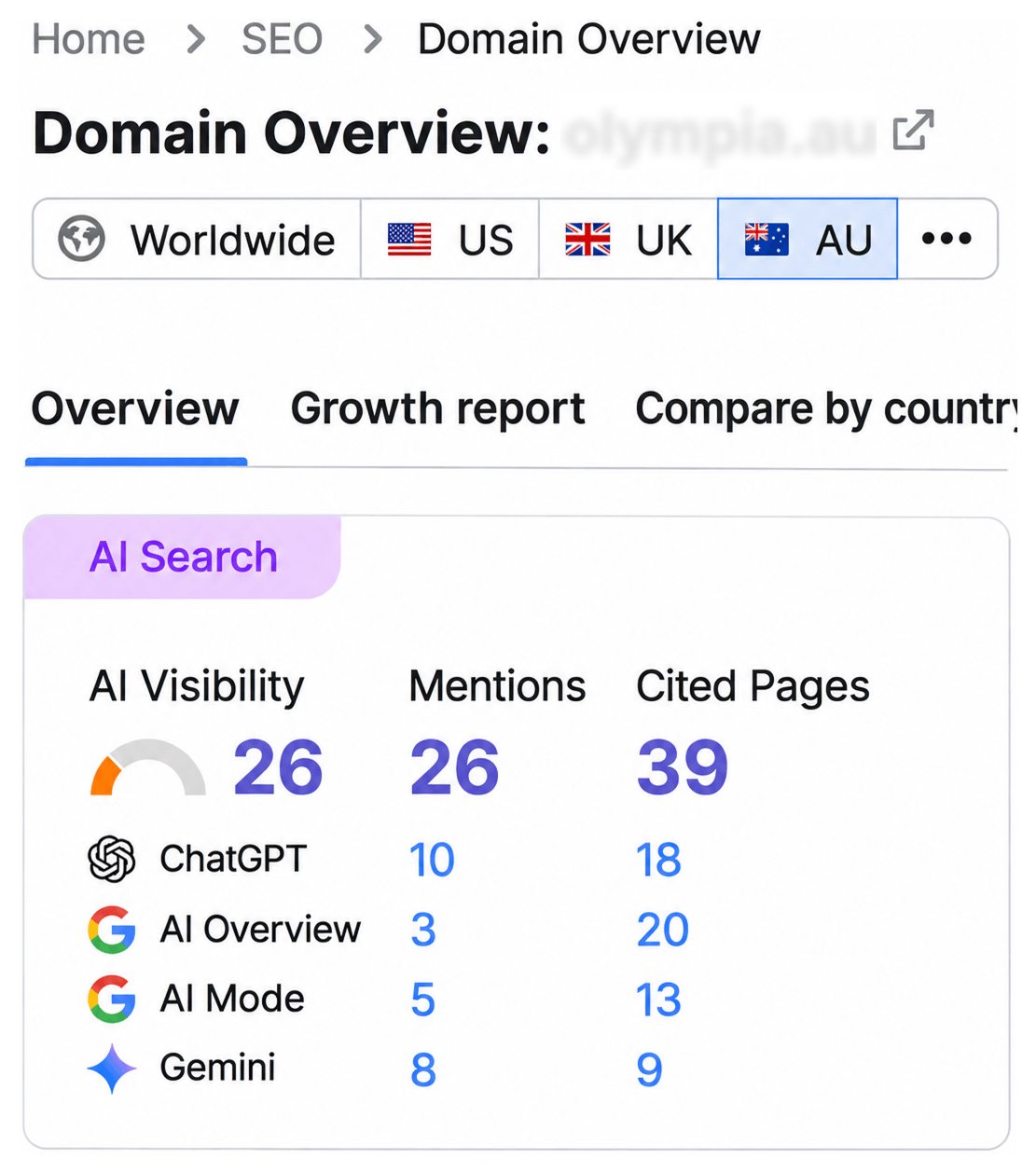
The brand holds an AI Visibility Score of 26. It has 26 AI mentions and 39 cited pages. A mention means an AI answer names the brand. A cited page is one of its web pages that an answer uses as a source. ChatGPT shows 10 mentions and 18 cited pages. Gemini has 8 mentions and 9 cited pages. In Google AI Mode, the brand appears in 5 mentions with 13 cited pages. Google AI Overviews mention it 3 times and cite 20 of its pages.

Sales Performance and What the Results Show

Total eCommerce sales reached A$215,379 from April to June 2026. That marks a 5% rise on the previous quarter. The figure includes every order, not just those from organic search. Meanwhile, traffic value grew faster than traffic itself, which points to more valuable searches. The data shows these results alongside the SEO work. It does not isolate each activity's effect or prove that SEO caused the sales increase.

Want More Shoppers to Find Your Store Through Search and AI?

Grow non-branded traffic and AI search visibility with an eCommerce SEO plan built around your products.

Frequently Asked Questions

According to Semrush, estimated organic traffic value rose 18.38% to $4.8K. That growth outpaced organic traffic, which climbed 9.15%.

It comes from people who search for a product or category instead of a brand name. This store’s non-branded visits reached 4.3K, up 5.85%.

ChatGPT and Gemini both mentioned the brand. So did Google AI Mode and Google AI Overviews. Overall, the brand has 26 AI mentions and 39 cited pages.

Total eCommerce sales reached A$215,379 from April to June 2026. That figure marks a 5% rise over the previous quarter.

No. The data shows higher sales alongside the SEO work, but it does not isolate what each activity achieved. Total revenue also covers every order, not just those from organic visits.

Talk to Our Experts

Lorem ipsum dolor sit amet consectetur. Tristique neque molestie morbi dictum tempus lorem platea nunc tincidunt.


    Turn Your Traffic Into Real Leads

    Every campaign is planned, built, and checked by experienced marketers. They research keywords, write content, manage ads, and improve your website. An AI-assisted workflow helps them spot gaps faster. The goal: more qualified leads, not just more traffic.

    Share Your Details

    Fill in a few details and our team will get in touch. We will review your goals and suggest the right next steps.